

Understanding Training Flights and VFR Traffic Patterns at Centennial Airport
Centennial Airport is a vital hub for a wide range of aviation activities—from business jets and emergency medical flights to flight training for new and experienced pilots alike. One important part of flight training involves practicing takeoffs and landings repeatedly, often referred to as touch-and-go operations. Other types of training include full-stop taxi-backs and stop-and-go’s.
Training flights happen at airports large and small, including Centennial. Pilots, whether students or seasoned professionals, practice takeoffs and landings multiple times during a single flight. This means flying a circuit, or “traffic pattern,” around the airport—a loop designed to help pilots safely gain experience.
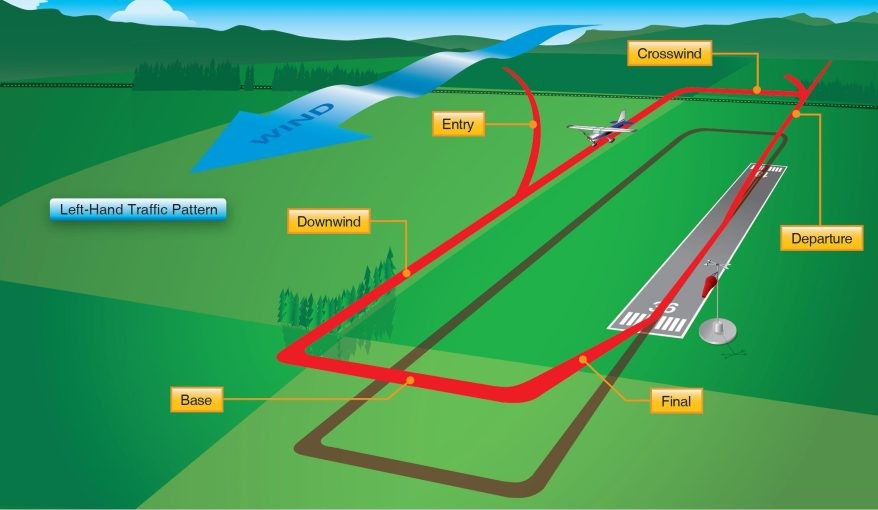
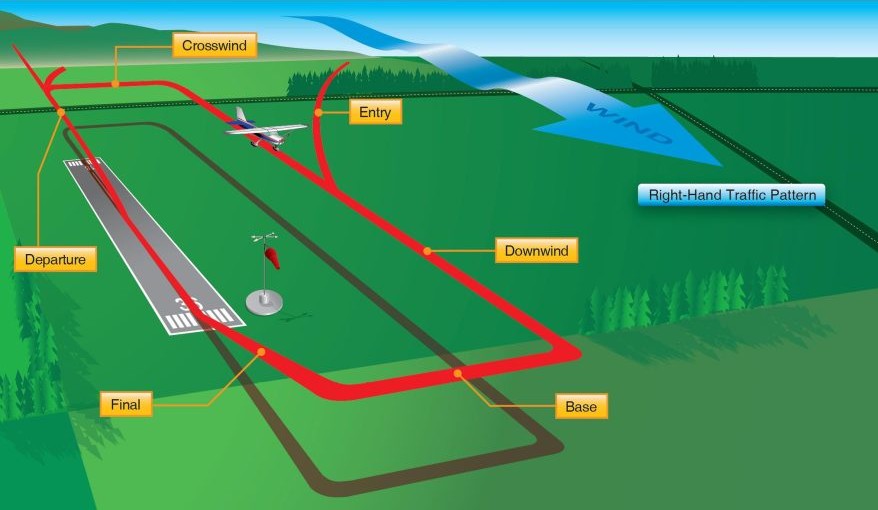
At Centennial, pilots fly a standard traffic pattern which involves a series of legs that create a rectangular path around the runway. These legs include:
- Upwind Leg: Flying straight out from the runway after takeoff.
- Crosswind Leg: A 90-degree turn away from the runway heading.
- Downwind Leg: Flying parallel to the runway but in the opposite direction of landing.
- Base Leg: Another 90-degree turn that positions the plane perpendicular to the runway.
- Final Approach: The last leg where the plane lines up with the runway to land.
This pattern is flown repeatedly during training.
Touch-and-go training means the plane lands but doesn’t come to a full stop—it quickly adds power and takes off again to repeat the circuit. A full-stop taxi-back means the aircraft lands then taxis back to the departure runway for takeoff and to re-join the traffic pattern. In a stop-and-go, the plane lands, comes to a complete stop on the runway and applies power for takeoff again . These procedures help pilots practice essential skills but can lead to more runway activity and repeated overflights of the same areas, especially during busy training sessions. Because these circuits involve flying over the same area multiple times, training flights often occur at lower altitudes and may be more noticeable than typical arrivals or departures.
Training isn’t just for new pilots—experienced pilots regularly practice to keep their skills sharp and meet safety requirements.
Practicing takeoffs, landings, and traffic patterns under various conditions—including day, night, and different weather—is critical for pilot proficiency and safety. These repetitive circuits prepare pilots for real-world flying and ensure the overall safety of everyone using the skies around Centennial.
